
Government's Ethanol Roadmap 2030: How It Will Affect Indian Vehicle Owners
By Harsh Dahiya
Contents
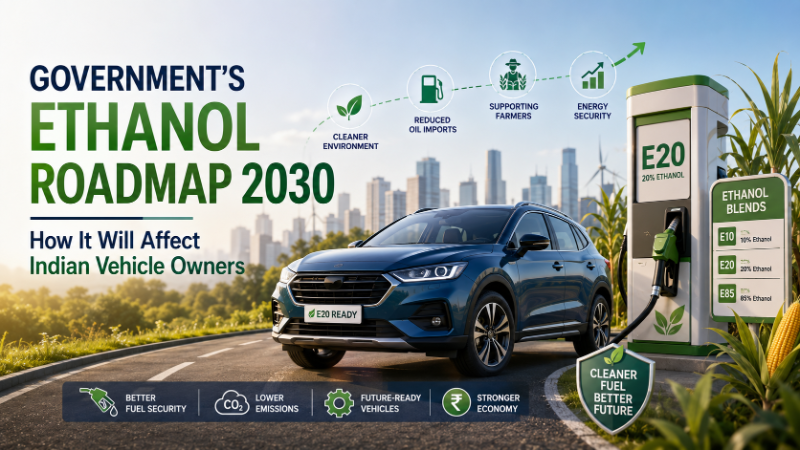 Ethanol Blended Fuel is gradually gaining momentum in India to reduce fuel imports and minimise emission levels from vehicles. With the government progressing towards its Ethanol Roadmap 2030, one thing that many vehicle owners would like to understand is what these changes are going to mean for their cars and bikes. Some questions that people want to know about include whether there will be any changes to fuel efficiency, whether they will be more expensive to maintain, and whether existing vehicles can run on higher ethanol blends.
It is vital to comprehend these advancements before purchasing a brand-new vehicle or intending for long-term ownership. The guide outlines the government's ethanol plan, the anticipated fuel changes, compatibility, benefits, challenges, and what Indian drivers need to know in the coming years.
What Is the Government's Ethanol Roadmap 2030?
Ethanol Roadmap 2030 is India's long-term plan to promote ethanol as a fuel for transport. Ethanol is manufactured from various agricultural products like sugarcane, maize, damaged grains, etc., and biomass.
The government has announced that it will ramp up the proportion of ethanol used in petrol gradually instead of using it in full. This is done to increase energy security and to decrease the dependence on imported crude oil.
The roadmap also calls on automakers to create engines that can be safely run on higher ethanol blends in the future.
Why Is India Promoting Ethanol?
India is a big importer of crude oil. This raises the expenses of the fuel, which makes the country prone to price fluctuations in the global market.
Using ethanol provides several advantages.
Major objectives include:
- Reduce crude oil imports
- Lower carbon emissions
- Support Indian farmers
- Promote renewable fuel sources
- Improve energy security
- Encourage cleaner transportation
The program benefits both the economy and the environment over the long term.
Understanding Ethanol Blended Fuel
Ethanol-blended fuel combines petrol with a fixed percentage of ethanol.
The blend is identified by names such as E10, E20, or E85.
| Fuel Blend | Ethanol Content | Petrol Content |
| E10 | 10% | 90% |
| E20 | 20% | 80% |
| E85 | 85% | 15% |
Currently, E20 fuel is gradually becoming available across many parts of India, while higher blends are expected to expand only as compatible vehicles become more common.
How Will the Roadmap Affect Vehicle Owners?
Vehicle owners will notice gradual changes rather than sudden ones.
Some effects will depend on the model year, engine type, and manufacturer recommendations.
Possible changes include:
- Greater availability of ethanol-blended fuel
- New engine technologies
- Updated fuel recommendations
- Better compatibility in future vehicles
- More awareness about fuel selection
Most daily driving habits will remain unchanged.
Can Existing Vehicles Use Ethanol-Blended Fuel?
Many petrol vehicles already support lower ethanol blends.
However, compatibility differs between manufacturers and model years.
Vehicle categories
| Vehicle Type | Compatibility |
| Older petrol vehicles | May require manufacturer guidance |
| Recent petrol vehicles | Often compatible with E20-ready standards |
| Diesel vehicles | Ethanol blending does not apply |
| Electric vehicles | Not affected |
Owners should always follow the recommendations mentioned in the vehicle owner's manual
What Are Flex-Fuel Vehicles?
Flex-fuel vehicles are specially designed to operate on petrol, ethanol, or different combinations of both.
These engines contain components that can handle higher ethanol concentrations without affecting reliability.
Benefits of flex-fuel vehicles
- Greater fuel flexibility
- Reduced dependence on petrol
- Lower emissions
- Better future readiness
More manufacturers are expected to introduce such models over the coming years.
Impact on Engine Performance
Modern engines are becoming increasingly capable of handling ethanol-blended fuel. Manufacturers continue improving engine calibration and fuel systems.
Possible performance benefits
- Cleaner combustion
- Reduced emissions
- Improved combustion efficiency
- Better compatibility in newer vehicles
Performance depends largely on whether the engine is designed for the recommended fuel blend.
Will Maintenance Costs Increase?
Maintenance requirements vary according to vehicle age and compatibility.
Newer vehicles built for ethanol blends generally require no special servicing beyond regular maintenance schedules. Older vehicles may need closer attention if higher blends become common.
Areas to monitor:
- Fuel filters
- Rubber hoses
- Fuel injectors
- Fuel pump
- Engine tuning
Following the manufacturer's service schedule remains the best approach.
Environmental Benefits of Ethanol
One major reason behind India's ethanol program is environmental improvement.
Renewable fuels help reduce greenhouse gas emissions compared to traditional fossil fuels.
Environmental advantages
- Lower carbon emissions
- Cleaner fuel combustion
- Reduced dependence on fossil fuels
- Better air quality
- Increased use of renewable resources
Although ethanol is not a complete solution, it supports cleaner transportation.
Economic Benefits for India
The ethanol program also creates financial advantages beyond transportation.
Expected economic benefits
- Lower import expenditure
- Increased rural income
- More employment opportunities
- Stronger agricultural demand
- Improved domestic fuel production
The initiative supports multiple sectors of the Indian economy simultaneously.
Common Concerns Among Vehicle Owners
As fuel policies evolve, many drivers have practical questions.
Frequently discussed concerns
- Will my current vehicle remain compatible?
- Should I buy a flex-fuel vehicle?
- Will resale value change?
- Will servicing become expensive?
- How will fuel availability improve?
Most of these questions depend on individual vehicle specifications rather than the fuel policy alone.
Choosing Your Next Vehicle
Future buyers should consider long-term fuel compatibility.
When purchasing a new vehicle, reviewing manufacturer specifications becomes increasingly important.
Factors to compare
- Engine compatibility
- Fuel recommendations
- Maintenance costs
- Manufacturer support
- Long-term ownership plans
Selecting the right vehicle today can provide better convenience over the coming years.
Challenges in Implementing the Ethanol Roadmap
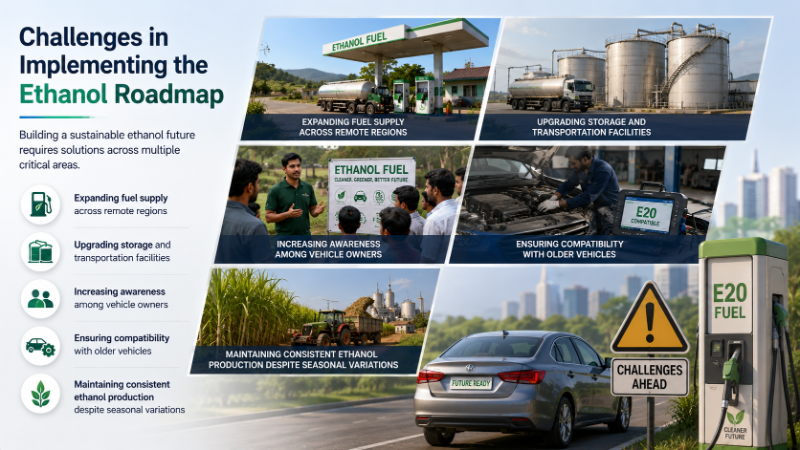 Although the roadmap offers many advantages, its implementation also comes with challenges. Addressing these issues will help ensure a smooth transition for vehicle owners.
Some common challenges include:
- Expanding fuel supply across remote regions
- Upgrading storage and transportation facilities
- Increasing awareness among vehicle owners
- Ensuring compatibility with older vehicles
- Maintaining consistent ethanol production despite seasonal variations
Government agencies and automobile companies continue working on these areas to improve nationwide adoption.
Should You Upgrade Your Vehicle?
Many car owners are wondering if they should get rid of their existing car right away.
In most cases, the answer is no.
In most cases, upgrading is not necessary just because of the ethanol roadmap since the manufacturer will be able to confirm the compatibility of the specific ethanol blend.
But consumers looking for a new car should think about ethanol-friendly options.
Consider upgrading if:
- Your vehicle is very old
- The manufacturer advises against higher blends
- You plan long-term ownership
- You are purchasing a new petrol vehicle
- Better fuel compatibility is important to you
Myths vs Facts About Ethanol Fuel
Several misconceptions create unnecessary confusion among drivers. Understanding the facts helps vehicle owners make informed decisions.
| Myth | Fact |
| Ethanol damages every engine | Only incompatible engines may face issues. |
| Mileage drops drastically | The difference is generally small in compatible vehicles. |
| Ethanol is harmful to all fuel systems | Modern E20-ready vehicles are designed for it. |
| Diesel vehicles need ethanol fuel | Ethanol blending mainly applies to petrol vehicles. |
| All existing vehicles require replacement | Most owners simply need to follow the manufacturer's guidance. |
Knowing the difference between myths and facts prevents unnecessary concerns.
How MotoInfo Helps Vehicle Owners
Managing a vehicle involves much more than choosing the right fuel. Owners also need quick access to important information related to registration, insurance, maintenance, and resale.
MotoInfo brings these services together on one platform, making vehicle management easier.
With MotoInfo, you can:
- Check RC details instantly
- View complete vehicle service history
- Track insurance status and renewal dates
- Check pending challans
- Monitor your vehicle's overall records
- Compare petrol and diesel prices based on your city
- Explore verified new and used vehicles
- Sell your car by entering the registration number and receiving instant valuation offers
- Find suitable insurance options for your vehicle
Instead of visiting multiple platforms, MotoInfo helps you manage essential vehicle information from one place.
👉 Manage your vehicle smarter with MotoInfo: https://www.motoinfo.app/
Future of Ethanol in India
Ethanol Roadmap 2030 is likely to be a significant element in India's long-term transport strategy. The electric vehicle is still in the process of becoming mainstream, and ethanol-blended fuel is another viable option for lowering foreign reliance on fossil fuel-based fuels.
In the next few years, motorists can expect:
- An increase in the availability of fuel that is blended with ethanol
- More E20-compatible vehicles
- Increased flex-fuel options
- Better fuel infrastructure
- Improved public awareness
- Cleaner transportation technologies
The transition will happen gradually, allowing manufacturers and consumers enough time to adapt.
Conclusion
The Ethanol Roadmap 2030 is a vital step towards cleaner and more sustainable transportation in India. While there may be some concerns about fuel types, miles, and maintenance, many vehicle owners have questions, but the transition is forecasted to be gradual and well supported. The majority of newer gasoline cars require very little modification to run on higher ethanol concentrations, and still more in the future.
For all vehicle owners, the first step to being prepared is to stay informed. To help ensure smooth performance through this transition, you should know your vehicle's fuel compatibility and follow the manufacturer's recommendations and maintenance schedules.
While all this is going on, it's also vital to make sure you have your vehicle's records. MotoInfo simplifies vehicle ownership by helping users check RC details, monitor insurance, review service history, track challans, compare city-wise fuel prices, explore verified vehicles, and access instant resale valuations—all through a single platform.